
4 Common Living Room Lighting Mistakes and How to Avoid Them
This article will educate readers on the five most common mistakes people make when lighting their living rooms and provide practical solutions to enhance both the aesthetic appeal and functionality of their space.
Setting up a new living room is an exciting time, one full of decisions. Unfortunately, many homeowners unknowingly make mistakes when setting up their living room lighting and this can negatively impact the space and how it gets used. This article will review some of the most common mistakes and how you can avoid them.
Common Living Room Lighting Mistake
When looking at living room lighting, Singapore systems or bulbs may not work as well as you want if you fail to incorporate things like color scheme, placement, and functionality. Below are the top four common mistakes people make with living room lighting ideas.
Mistake 1: Relying Solely on Overhead Lighting
One of the biggest mistakes people make is relying solely on their overhead lights. Living room ceiling lights can result in harsh, unbalanced light if they are only the overhead lights. These can be too bright when it comes to nighttime activities like relaxing or reading. They might also create too many shadows or be too bright in your eyes when you want something a little less severe.
You can utilize layering instead of relying solely on one overhead light to fix this problem. For example:
- Ambient light, task light, and accent light can all be used in tandem to create a more inviting atmosphere. A single living room with a ceiling fan light in the center might also benefit from having strip lighting over one large bay window, a standalone floor lamp on the opposite wall, accent lighting over the fireplace, and small task lighting in the form of two lamps on either side of the couch for reading.
In the example above, that living room now has many mix-and-match opportunities. During the day, if there’s a lot of natural light, they might only need the standing table light where there’s a shadow because of the location of the windows, but in the evening, they might need all of the lights to compensate for when the sun goes down. But as it’s time to relax, the main light overhead can go off while the other stays on to create a warm, inviting atmosphere.
Mistake 2: Ignoring the Functionality of the Space
When looking through living room lighting ideas, sometimes homeowners completely ignore the functionality of the space. They get excited about a lighting idea they saw and they go to implement it, completely ignoring the fact that it doesn’t work well with how they intend to use the room.
You need to consider the different activities that will transpire in your living room and how you want to light those activities effectively.
For example:
- If you plan to use your living room for relaxing, you will need to consider some form of living room lighting that has warmer tones or the option of warmer, smaller light, facing downward so that it’s not bright and in your face, but it still gives you room enough to see. This might include lights on either side of a television so that you aren’t backlit, but the television is.
- If you plan to use the room for reading, you’ll want to diversify your lighting fixtures with things like table lamps that go on either side of the living room so that as you read and relax in the evening you can turn those on.
- If you want to use the room for entertaining, you might need to layer several lights including bright ceiling lights that can help you keep the space upbeat and lively even as the sun goes down mixed with standalone lamps and smaller accent lighting around key areas of the living room like your television, a piece of art, or a small bar.
Don’t be afraid to mix and match several types of lighting fixtures so that you can create any of these options above, and you can create the right type of lighting, whether it’s day or night, considering how much natural light you have in the space.
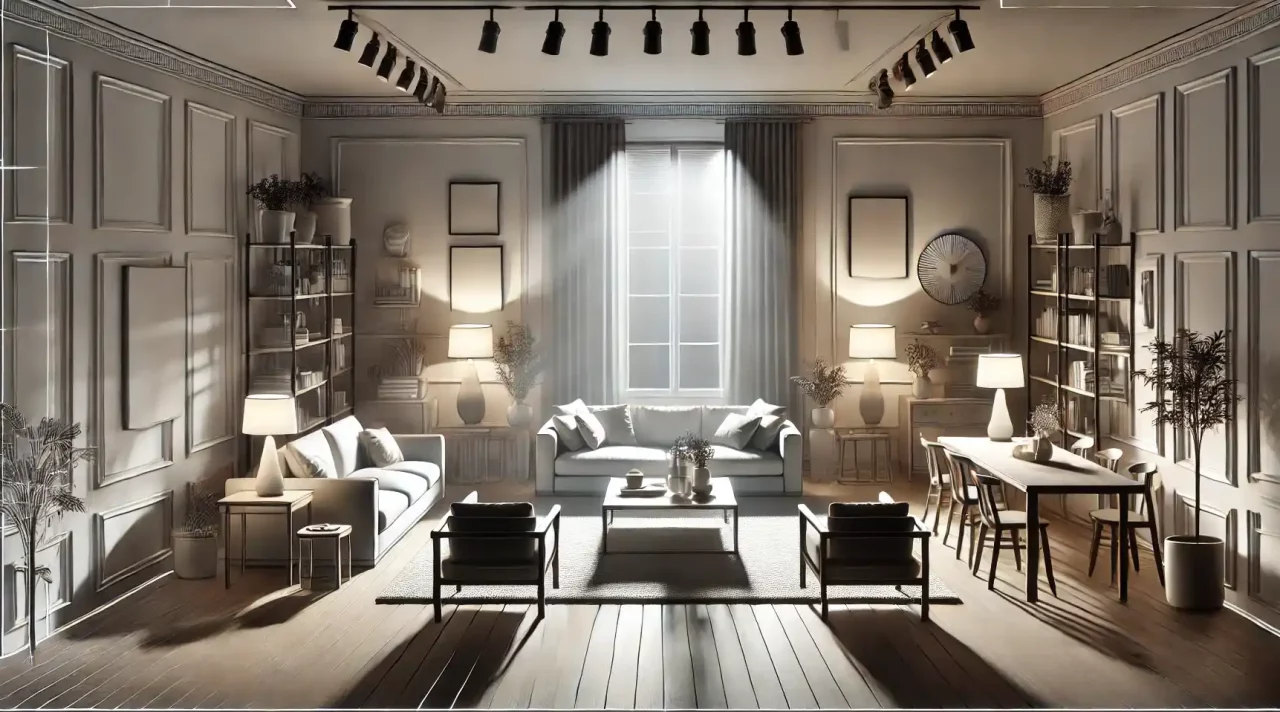
Mistake 3: Poor Placement of Lighting Fixtures
Another mistake that homeowners make is incorrectly placing lights so that they create a glare or leave important areas in shadow.
Just as it is important to consider how you want to use the space, you need to make sure that the living room lighting ideas you use make the most of the space.
For example:
- You want to consider strategic lighting placement that doesn’t create glare or leave things in shadows. If, for example, you have two accent lights in the ceiling that are angled toward your fireplace, they might leave the other side of your living room in shadow, in which case you might need a standalone lamp to brighten the area.
- You want to have balanced light distribution so if you have a single ceiling fan that serves as the main source of light with one or two table lamps, you won’t have good light distribution for the majority of your room.
- You want to avoid common placement errors, such as putting all your light fixtures in one location or spreading them out too far so that they are only in the corners.
Consider where you typically sit, stand, or otherwise use the space. Walk around the room at different times of day to see from which angles you have glare or shadow and where you might make better lighting decisions.
Mistake 4: Not Considering the Room’s Color Scheme
The final mistake is not considering the room’s color scheme. Homeowners may not be aware that the room’s color palette actually affects the perception of light, and that’s why it’s essential to match the lighting color temperature to the room’s design.
When you are looking at different living room lighting Singapore ideas, you have to consider how your lighting actually complements the space.
For example:
- If you have warmer color schemes in your living room like yellow, red, or orange, you’ll want yellow-toned lights to complement those colors.
- If you have lots of purple, green, or blue paint on the walls or fabric on the furniture, you’ll need cooler, blue-toned lights to complement that color scheme.
- If your room has large windows with lots of natural light, cooler-toned blue lights can balance out the warmer, natural sunlight throughout the day.
- If you don’t have a lot of windows and limited natural light in your living room, you can generate a cozier atmosphere by investing in warm toned light to complement this.
Selecting the right lighting to complement the room’s colors can enhance both warmth and contrast instead of making the room an eyesore.
Conclusion
With living room ceiling lights, it’s not uncommon for homeowners to make common lighting mistakes like failing to consider the room’s color scheme, placing the light fixtures in a way that creates glare, ignoring the function of the space, or relying solely on overhead lighting. Thankfully you can evaluate your current lighting setup and make the necessary adjustments to improve the ambience, functionality, and efficiency of your living room.