
How WiFi Smart Light Works and Why It’s Essential for Every Modern Home
The residential lighting industry has experienced a significant transformation with the widespread adoption of WiFi-enabled smart lighting systems. What began as specialty technology for early adopters has evolved into mainstream home infrastructure that addresses the changing needs of modern households.
Contemporary living patterns demand greater flexibility from home systems. Remote work arrangements, frequent travel, and lifestyle preferences require lighting solutions that extend beyond traditional switch-based controls. A wifi smart light system provides automated functionality that adapts to occupant schedules and preferences.
These technological advances impact multiple aspects of home management, including energy consumption, security protocols, and daily convenience factors. Evaluating the operational mechanics and benefits of smart lighting systems enables informed decision-making regarding residential lighting upgrades.
What is a WiFi Smart Light?
A wifi smart light connects to your home’s internet router and responds to commands from phone apps, voice assistants, or automatic schedules. Regular bulbs depend on wall switches. Smart light bulbs with Wi-Fi models receive wireless signals even when the wall switches stay “on.”
The control difference matters. Traditional bulbs turn on when electricity flows through switches. Smart bulbs get wireless commands telling them what to do. You can control them from your car, schedule automatic operation, or adjust brightness from bed.
Types of WiFi Smart Lighting
Smart Light Bulbs
Smart light bulbs with Wi-Fi units look normal but contain wireless chips and LED technology. Basic models offer dimming and can shift from bright white for work to warm amber for relaxation. Advanced versions provide millions of colors for entertainment or seasonal decorating.
Expensive models sync with music, create gradual wake-up routines, or adjust automatically throughout the day. One smart bulb replaces multiple regular bulbs since it handles different brightness levels and colors.
Smart WiFi Light Switches
A smart wifi light switch replaces wall switches while keeping familiar operation for family members. These add wireless control to existing bulbs and work well for controlling multiple lights simultaneously.
This approach makes sense for ceiling fans with lights, older fixtures where smart bulbs don’t fit, or when you want one switch controlling several regular bulbs instead of replacing each individually.
How Does WiFi Smart Lighting Work?
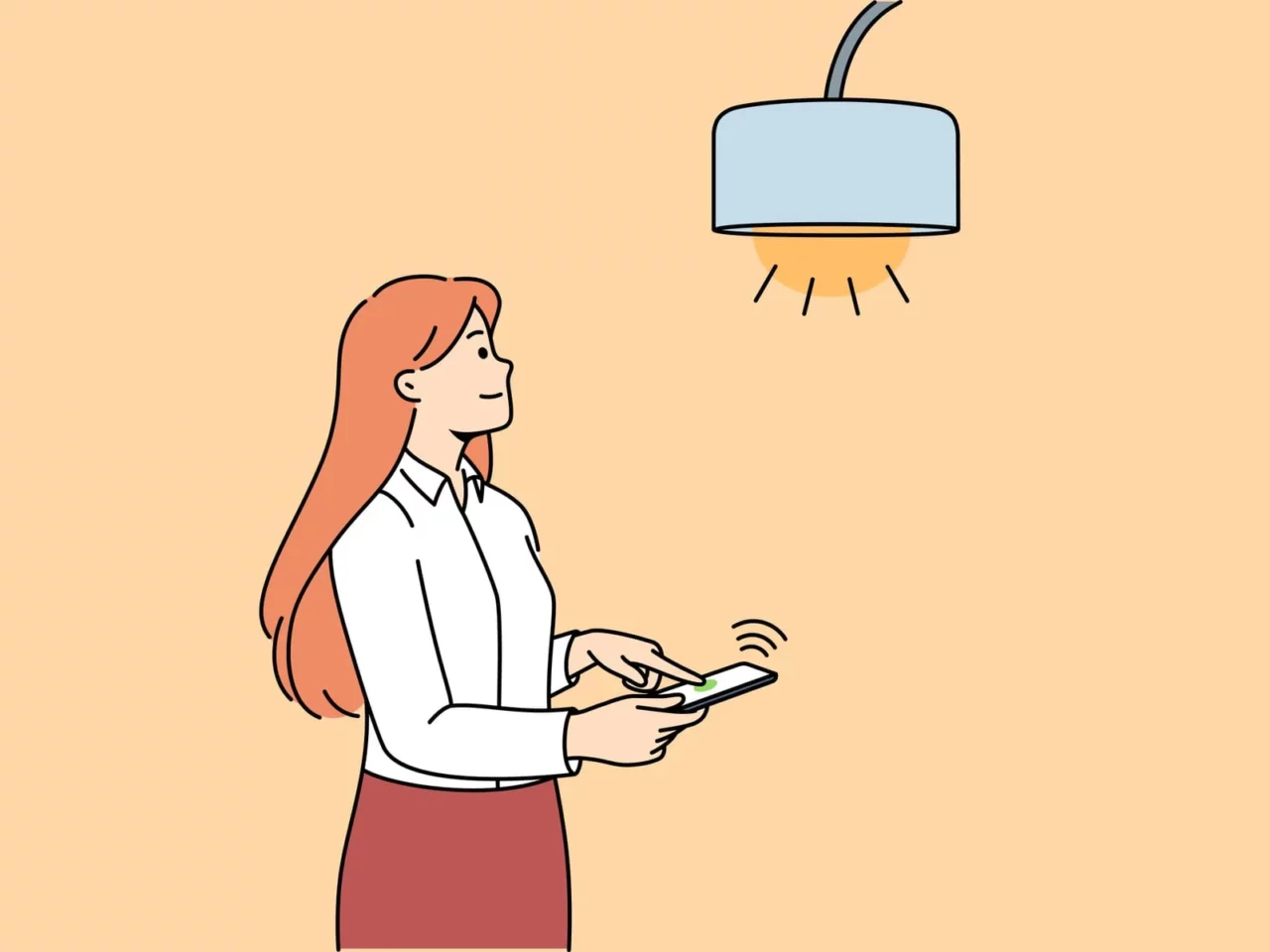
The technology uses your wireless internet to send commands between phones and lights. Open the app, tap a button, and your phone sends signals through your router to specific bulbs. They respond by turning on, dimming, changing colors, or following schedules.
Voice assistants work identically. Say “turn off bedroom lights,” and your speaker sends wireless commands through your internet connection. Bulbs respond exactly like phone app commands.
Key Components
Most systems need smart bulbs or switches, phone apps, and your existing WiFi network. Some brands require hub devices to plug into routers. Others connect directly without extra hardware.
These pieces create a smooth operation. Apps store settings and schedules. WiFi carries commands instantly. Smart devices respond to proper instructions. Everything runs automatically once configured.
Key Features of WiFi Smart Lights
Remote Control and Customization
Phone control works anywhere with internet access. Forgot the lights during vacation? Turn them off remotely. Want lights ready when arriving home after dark? Activate them from work.
Customization goes beyond basic on-off control. Adjust brightness for reading versus watching TV. Change color temperature from cool white for focus to warm white for relaxation. Create lighting scenes for different activities.
Voice Integration and Automation
Voice control through smart speakers eliminates the need to find phones or walk to switches. This helps when carrying groceries, cooking, or managing children. Just tell the lights what to do.
Automation includes scheduling for specific times, gradual dimming for bedtime routines, or responding to sunrise and sunset. Some systems detect departures and create realistic activity patterns for security.
Key features worth considering:
- Remote access through phone apps from any internet location
- Voice control compatibility with popular smart home assistants
- Scheduling capabilities for daily routines and vacation settings
- Dimming controls adjust brightness for various activities
- Color-changing options for entertainment and seasonal decorating
Why WiFi Smart Lights Are Essential for Modern Homes
Convenience and Energy Efficiency
Managing home lighting through one app eliminates daily walks to turn lights on and off. Program lights to match your schedule, and they handle themselves. This saves time and prevents unnecessary energy use.
Energy savings come from LED technology plus smart features that prevent waste. Lights turn off in empty rooms, dim with adequate natural light, and operate only when needed. Most people reduce their lighting electricity costs by 20-30%.
Security and Ambiance Benefits
Smart lighting improves security through realistic occupancy simulation during trips. Instead of basic timers operating at identical times daily, wifi smart light systems vary patterns naturally.
Ambiance control transforms room usage. Bright white morning light automatically shifts to warm amber for dinner, then dims for evening activities. Entertainment lighting syncs with movies or music for immersive experiences.

Setting Up WiFi Smart Lights
Installing Smart Light Bulbs
Smart light bulbs ‘ Wi-Fi installation works like changing regular bulbs. Turn off wall switches, remove old bulbs, and screw in smart replacements. Setup involves connecting them to your wireless network through the manufacturer’s apps.
Download the app, create accounts, and follow pairing instructions. Most bulbs enter setup mode automatically when first powered. Apps find nearby devices and guide network connections.
Installing Smart WiFi Light Switches
Smart wifi light switch installation requires electrical work, replacing wall switches. Turn off the power at the circuit breakers, remove the old switches, and connect the wires according to instructions. This needs more skill than changing bulbs.
Many smart switches need neutral wires that older homes sometimes lack. Check existing wiring before purchasing. Hire electricians if you are uncomfortable with electrical work or if your homes need wiring updates.
Network Connection
WiFi connection happens through manufacturer apps. Enter network names and passwords, then follow setup prompts. Keep devices within good WiFi range for reliable operation.
Some systems require 2.4GHz networks instead of faster 5GHz bands. Check router settings, ensuring the correct network frequency during setup.
Troubleshooting Common Issues
Connectivity Problems
WiFi signal strength affects smart lighting performance. Weak signals cause slow responses or connection failures. Consider WiFi extenders or mesh networks for rooms with frequent connectivity issues.
Router compatibility creates problems with older networking equipment. Smart lights work best with modern routers supporting current standards and multiple connected devices.
Compatibility and Resets
Device compatibility issues arise when mixing brands or using old phones with new lighting systems. Check manufacturer requirements before purchasing to ensure phone and router compatibility.
Resetting smart lights involves specific on-off patterns or holding buttons for set periods. Follow the manufacturer’s instructions for exact procedures when devices stop responding.
Common troubleshooting steps:
- Check the WiFi signal strength in rooms with inconsistent smart light operation
- Restart routers and devices when connection problems develop suddenly
- Update phone apps and device firmware, maintaining compatibility
- Verify network settings match the manufacturer’s frequency requirements
- Follow proper reset procedures when devices become unresponsive
WiFi Smart Lights: Essential for Modern Living
WiFi smart light technology has matured into a reliable home improvement delivering genuine benefits. Energy savings, convenience, and enhanced functionality justify costs for most households wanting modern lighting control.
Start with the main living areas where you’ll use the remote control, scheduling, and customization the most. Bedrooms, living rooms, and kitchens benefit significantly from smart lighting capabilities that regular switches can’t provide.
The technology fits how people live now while cutting energy costs and improving convenience. As smart home adoption grows, wifi smart light systems become increasingly necessary for homes adapting to residents instead of forcing residents to work around outdated lighting limitations.